

Policy and Practice Engagement
As findings emerged from the project we aimed to ensure that they reached the relevant stakeholders to influence how policies and practices around transition support for disabled young people could be improved. Below we detail some of this work….
Page Contents
Key Findings and Policy Recommendations
Experiences Seeking Employment
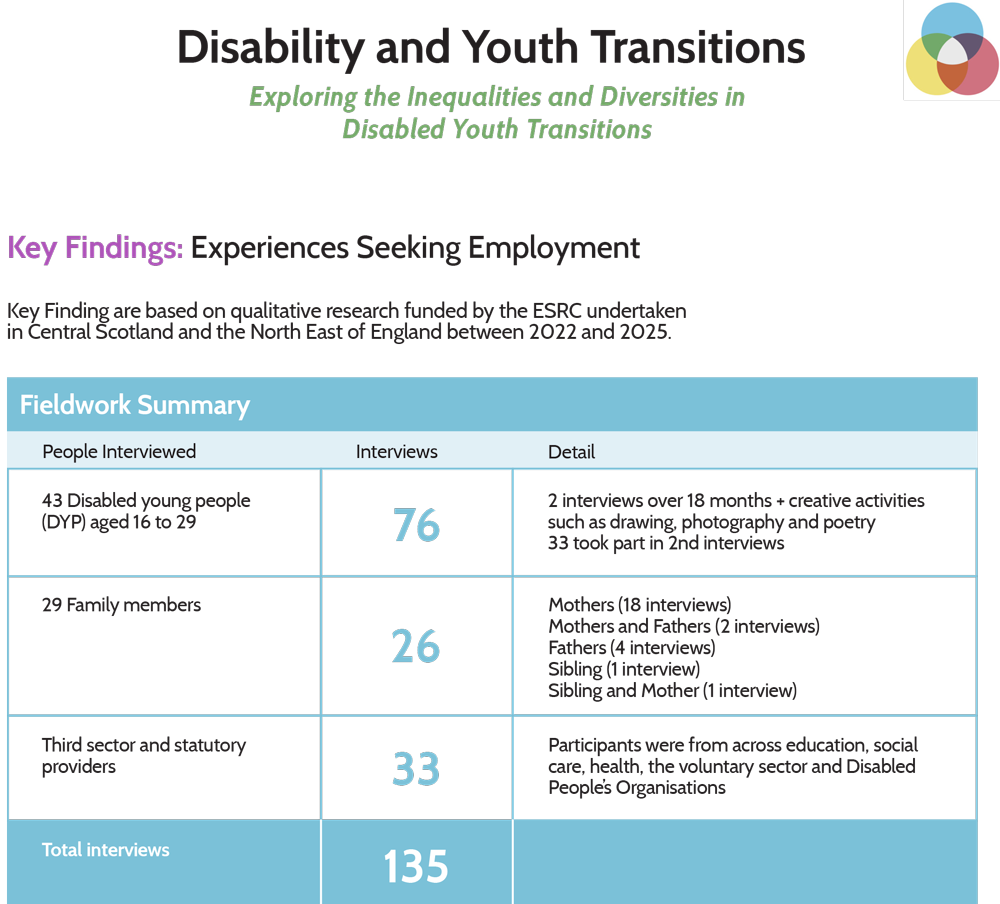
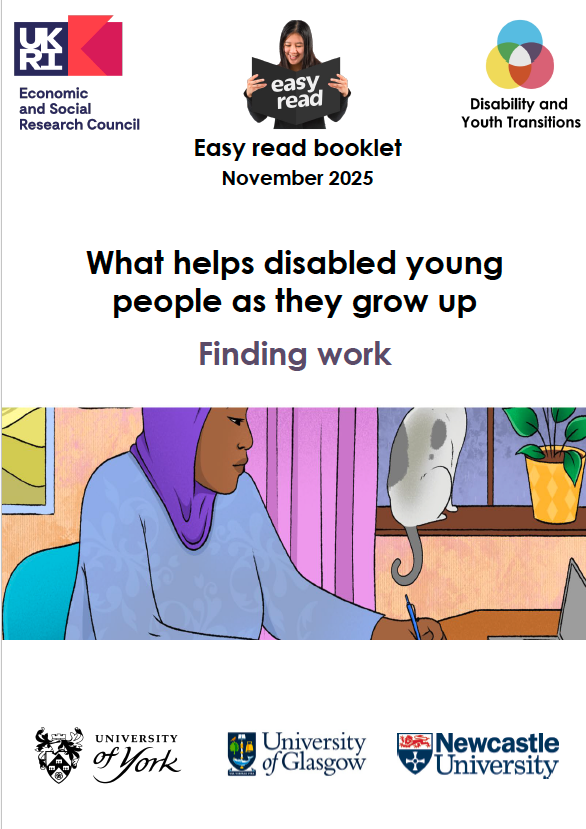
For disabled young people who are post education, experiences trying to find work include lots of barriers and challenges. Gaining qualifications and useful experiences, do not always make a huge difference in outcomes. Some schools, colleges and support groups are active in helping disabled young people, but they often face difficulties in getting employers on board to offer opportunities and adapt recruitment processes…
Families and Interdependencies
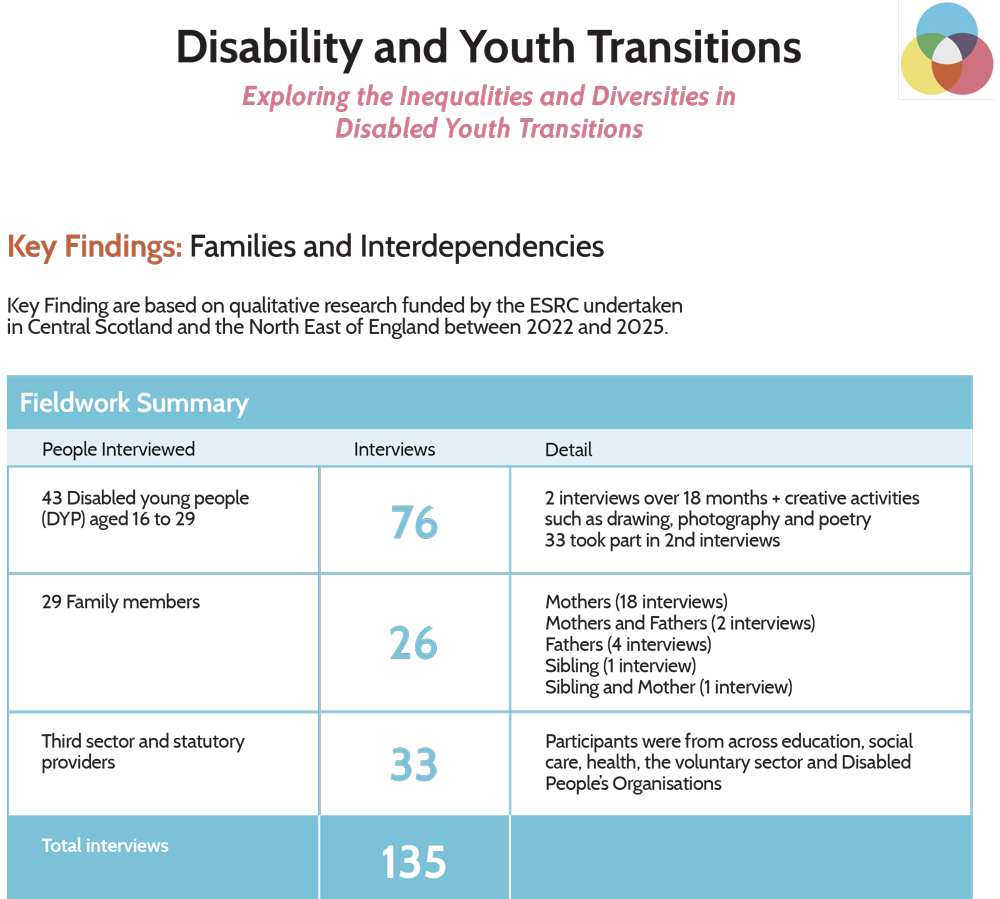
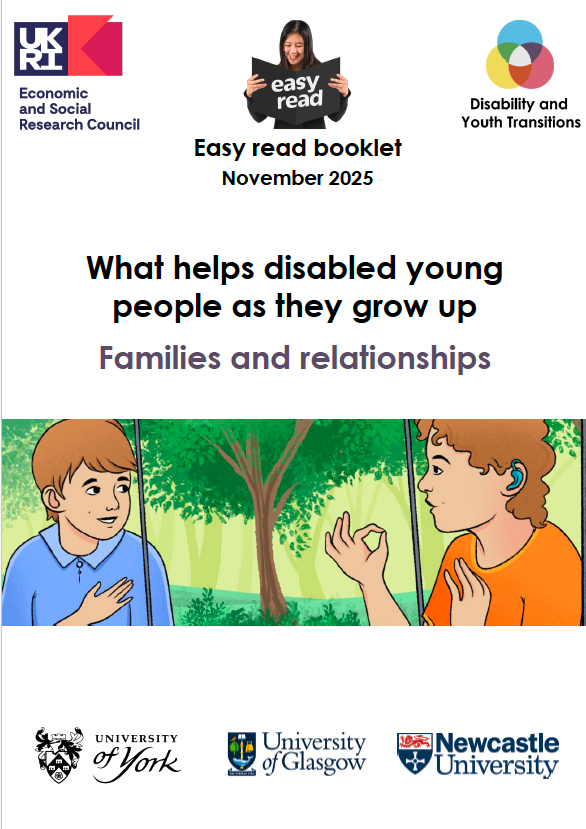
Families are central to disabled young people’s lives, and are often experienced as supportive, dependable and loving. Most disabled young people spoke about the vital role that family, usually mums, played in advocating for them throughout their lives. For some, however, family is a source of pain and sometimes abuse. Where disabled young people are estranged from families, some have found family in other settings – through a partner’s family or in a foster family. Support organisations play a key role in the lives of many disabled young people, and can be experienced as a kind of family…
Education and Social Participation
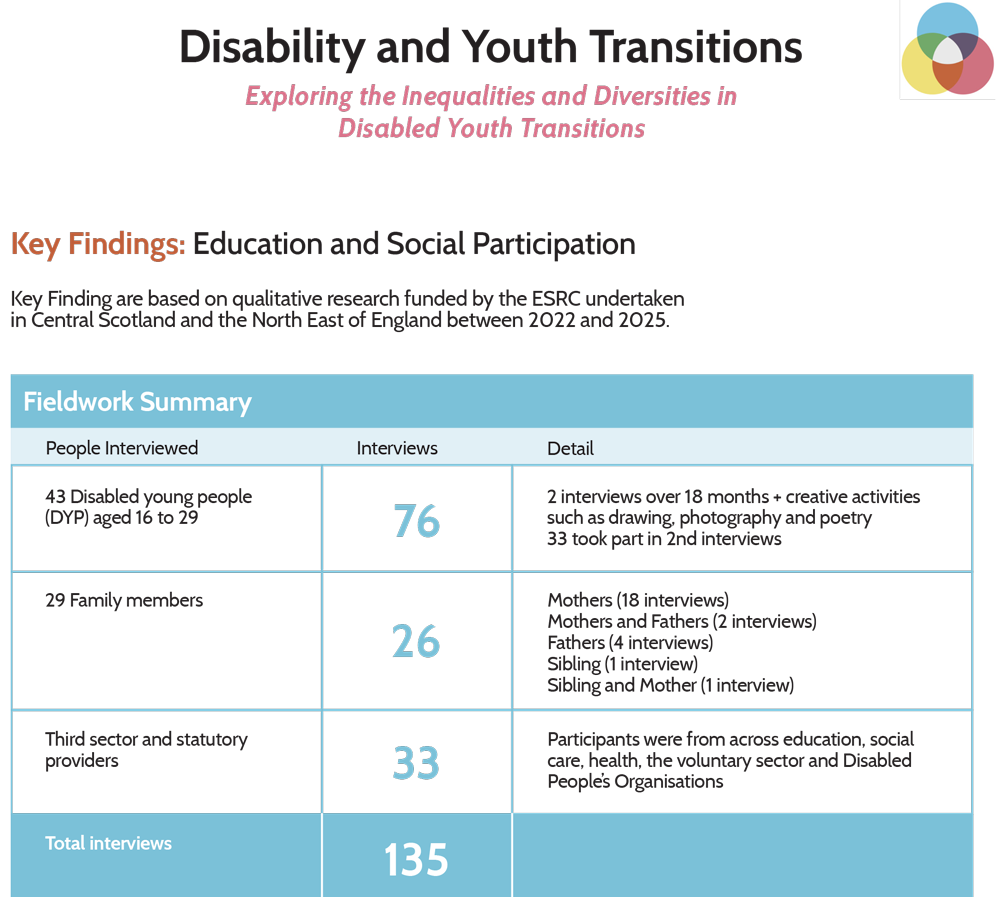
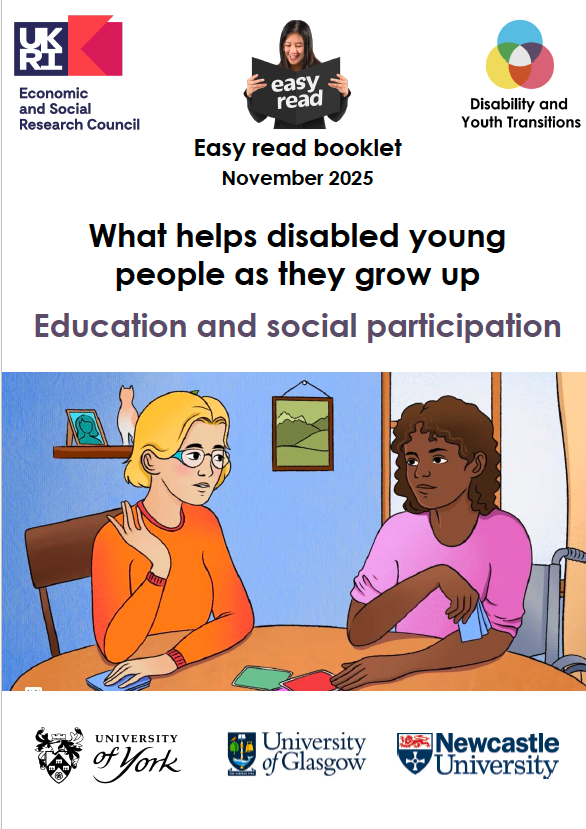
Having opportunities to have a social life are an important part of ensuring the health and wellbeing of disabled young people. There are numerous barriers to disabled young people being able to participate in social life. The costs are high. Support groups are filling in much of the gap, but they need need better and more secure funding to play that role. Other institutions, particularly schools, need to do a better job of enabling disabled young people to be welcomed…
Social Care
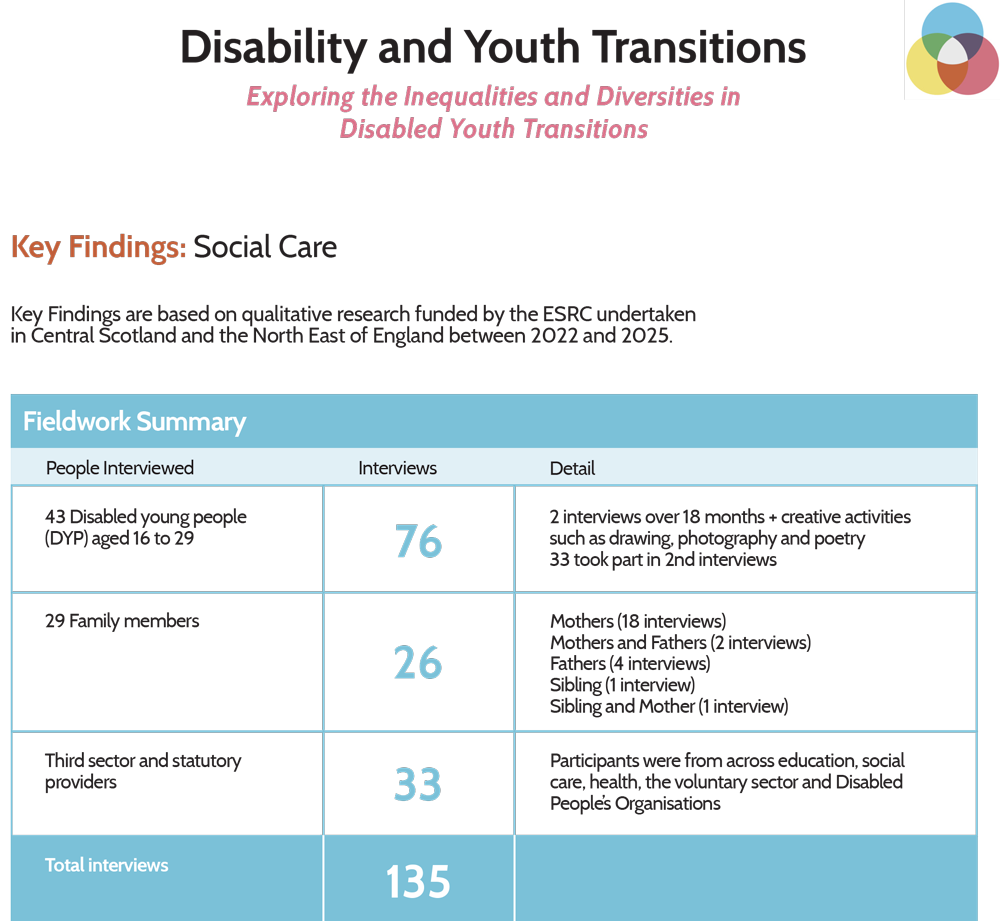
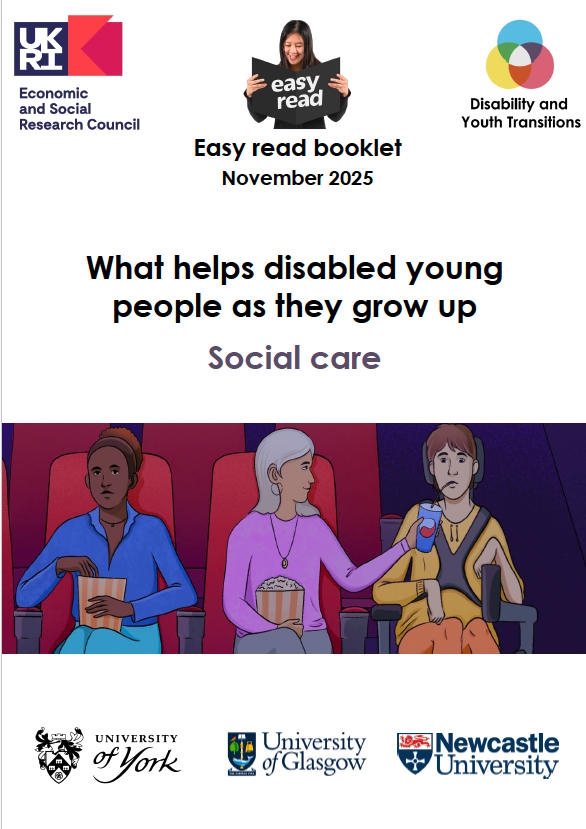
The role of social care in the transitions process is often critical for many disabled young people, linking in services which help support their independence in everyday lives. It is a devolved policy area, meaning that England and Scotland have different frameworks in place. Both countries have developed local care markets, where providers from private, state and third sectors bid for service tenders set up by local authorities. In England, there is a more dominant role for the private sector…
Policy Briefs
Over the course of the project we produced a series of policy briefs for decision-makers and stakeholders in the North East of England and Scotland based on the findings of our research.
August 2025
Policy Brief 5

Policy Brief 5 looks at what has been framed in the media as the SEND crisis in Schools in England and the suggestion that one solution is to remove Education, Health and Social Care Plans. We argue against that idea.
Policy Brief 5 (Easy Read)

Here is an Easy Read version of Policy Brief 5.
January 2025
Policy Brief 4

Policy Brief 4 focuses on the North East and the challenges disabled young people can experience gaining employment and the difference colleges, placement providers and employers can make in resolving some of those challenges.
Policy Brief 4 (Easy Read)

Here is an Easy Read version of Policy Brief 4.
January 2025
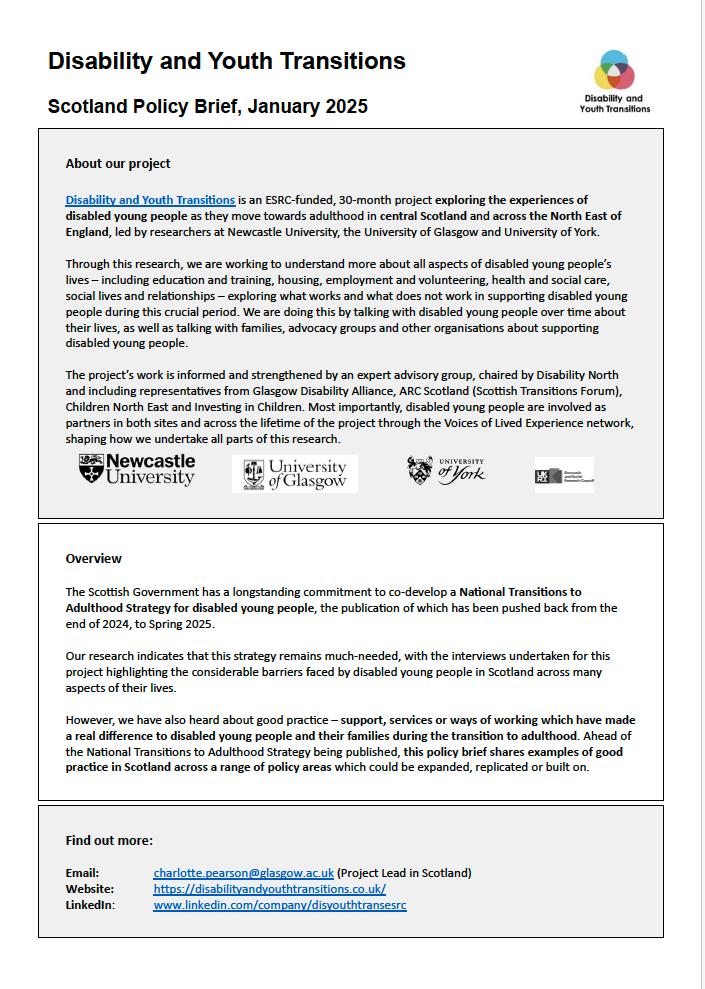
Policy Brief 3
Policy Brief 3 details a series of positive areas of provision and practice in Central Scotland that are making a difference in the transition experiences of disabled young people.
Policy Brief 3 (Easy Read)

Here is an Easy Read version of Policy Brief 3.
October 2024
Policy Brief 2
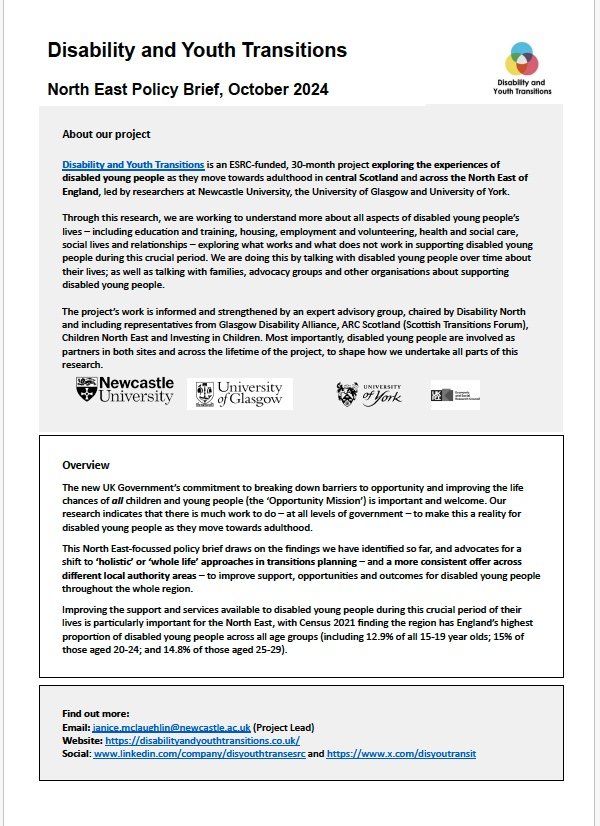
Policy Brief 2 focused on the North East explores what a holistic approach to supporting disabled youth transitions would look like and the current barriers to it occurring. It proposes the change in UK government and the expanded role of the Combined Authorities of both the North East and Tees Valley provide an opportunity to take this different approach.
Policy Brief 2 (Easy Read)
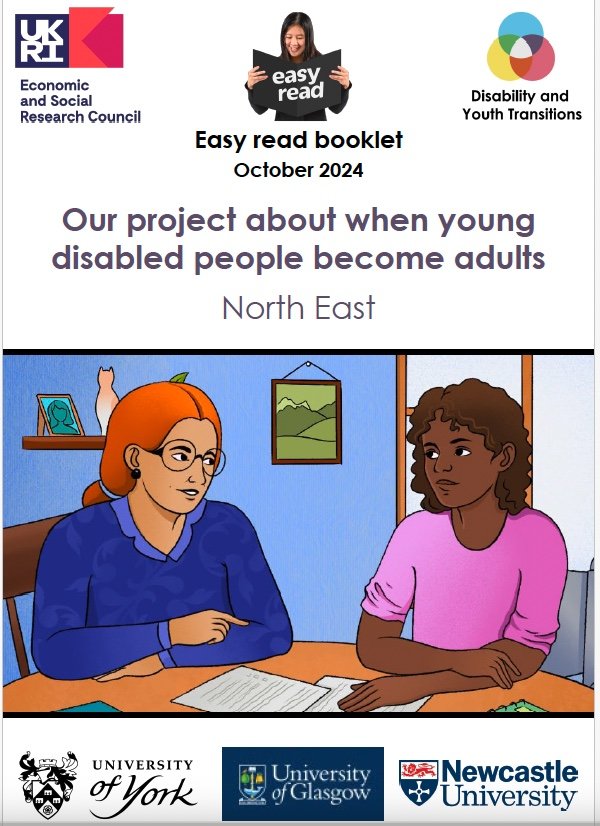
Here is an Easy Read version of Policy Brief 2.
April 2024
Policy Brief 1
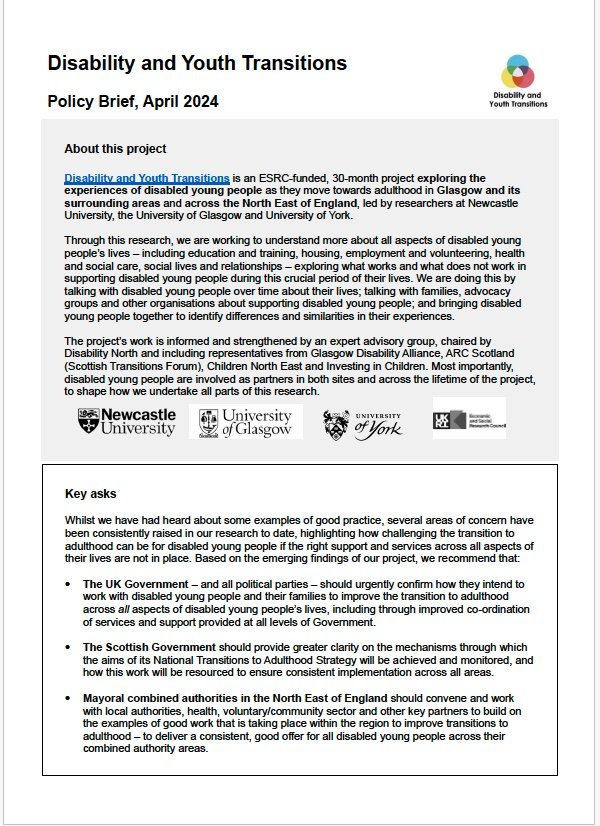
Our first Policy Brief, with a focus on the UK Government’s Disability Action Plan; the Scottish Government’s National Transitions to Adulthood Strategy; and a recommendation for the North East’s two mayoral combined authorities and local partners.
Policy and Consultation Submissions

October 2024
The House of Lords Public Services has published its report on the problems disabled young people face making the move from education into employment, highlighting areas of good practice, but also important barriers that can be addressed. The report cites our research as well as our team member Dr Charlotte Pearson acting as advisor to the work of the committee. The report can be found here, alongside Easy Read, BSL and Audio versions of the report:

March 2026
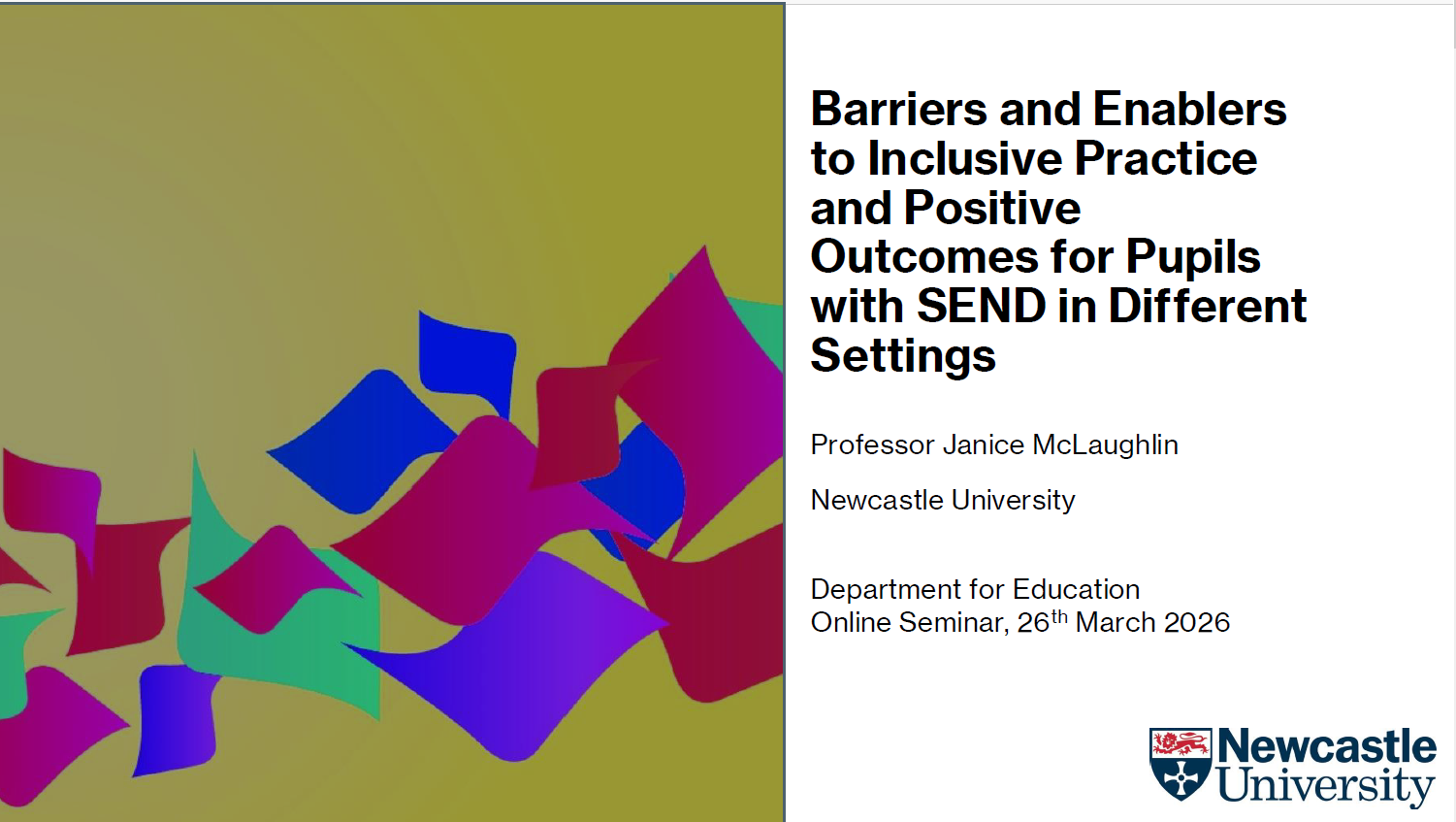
Findings from the project were shared with the Department for Education in March 2026. This was part of a regular seminar series the DfE run, inviting researchers and academics to present a piece of research on topics relevant to the work of SEND and Alternative Provision policymakers and analysts within DfE. The presentation doesn’t reflect an official DfE stance/endorsement. The presentation discussed findings related to education and reflected on the SEND Reform white Paper launched in February 2026. The presentation ‘Barriers and Enablers to Inclusive Practice and Positive Outcomes for Pupils with SEND in Different Settings’ can be downloaded from here.
October 2024
The Scottish Economy and Fair Work Committee launched their report on Disability employment gap calling on the Scottish Government to to deliver a detailed action plan that focuses on the needs of people with learning disabilities and neurodiverse people if the disability employment gap is to be halved by 2038. The report (including accessible versions) can be accessed here. Our team member Dr Charlotte Pearson gave evidence based on our research to the committee (see May 2024 below).
May 2024
Our project member, Dr Charlotte Pearson, was asked to give evidence to the Scottish Parliament’s Economy and Fair Work Committee on the support and information available to disabled young people as they transition to adulthood, as part of its wider inquiry into the disability employment gap – and was able to share some of the emerging findings of our research with Committee members.
April 2024
The House of Commons Work and Pensions Committee is holding an inquiry into disability employment. You can read the written evidence we submitted to this inquiry on the Committee’s website.
October 2023
We made a joint submission to the UK Government’s consultation on its draft Disability Action Plan, based on the emerging findings from our research. You can read our joint submission here.
November 2023
The House of Lords Public Services Committee is holding an inquiry into the transition from education to employment for young disabled people, to which our project team member Dr Charlotte Pearson is now acting as a specialist adviser. You can read our joint submission to this inquiry on the Committee’s website.
November 2023
We responded to a Scottish Government survey consulting on its ‘statement of intent’ for the proposed development of a National Transitions to Adulthood Strategy for disabled young people in Scotland. You can read our survey response here.
December 2023
The Scottish Parliament’s Education, Children and Young People Committee is holding an inquiry into Additional Support for Learning (ASL). You can read the submission we made to this inquiry on the Committee’s website.
Blogs and other public dissemination

Blog for the Glasgow University Centre for Public Policy UK General Election Policy Insights series.
In this Blog Dr Charlotte Pearson writes about the transition into adulthood for young disabled people, current manifesto commitments, and the need for a holistic approach to policymaking across all levels of government.
Learning from the Development of Principles of Good Transitions in Scotland
Online workshop, 9th October 2023
On the 9th of October 2023, we held an online workshop exploring the development in Scotland of the Principles of Good Transitions, the implementation of Principles into Practice and the launch of the Compass software/app. 73 participants from across North East and Cumbria local authorities, the healthcare sector, and advocacy organisations registered to find out about this work, which has been a result of a long term collaboration between ARC Scotland, local authorities, the Scottish government and crucially the input of disabled young people at all stages. Scott Richardson-Read of the Scottish Transitions Forum from ARC Scotland outlined the work that had been done, while Vici Richardson from Disability North and Helen Sutherland from the Northumberland Parent and Carer Forum and Chair of the North Northumberland branch of the National Autistic Society highlighted some of the experiences of disabled young people and their families in the North East and Cumbria.
The aim was first to introduce the work that has occurred in Scotland but also to explore the possibilities of drawing from this work and the resources that have been produced to improve the coordination of services and the experiences of disabled young people and their families. From those present, there seemed an appetite to take these discussions further and explore what could be possible. We will be exploring how we can help facilitate those possibilities.
Below are materials from the day, including a summary of discussions, a recording of the presentations, slides and further material provided by ARC Scotland on their work.
We will be in contact with participants to explore what the next steps should be.
Summary of our discussions in the breakout rooms
Recording of the presentations by Scott Richardson-Read, Vici Richardson and Helen Sutherland (please note that unfortunately the recording began 5 minutes into Scott’s presentation).
Resources
Scott Richardson-Read’s slides: NE network event slides
Vici Richardson’s slides: Vici Richardson Transitions presentation
Information about the Principles into Practice work and Compass:
Scottish Transitions Forum website: http://scottishtransitions.org.uk
Sign up for Compass our digital transitions tool: http://www.compasslaunch.scot/
Principles into Practice Framework to improve Transitions: http://www.pn2p.scot/
Youtube Channel for ARC Scotland (which has lots of info on the work behind the Principles from the disabled young people who have been involved): https://www.youtube.com/user/scotlandARC
Feedback
We would love to hear what you think about our research. If you have any feedback, you can send it to us using the form below…